Showing posts with label palm oil. Show all posts

Tuesday, June 16, 2015

June 2015 West Papua Report is now out!

read the issue here: http://etan.org/issues/wpapua/2015/1506wpap.htm


CONTENTS
This edition's PERSPECTIVE examines Indonesia President Widodo's failure to follow through on his election promises concerning West Papua, as his policy changes are regularly contradicted by those charged with implementing them.

In UPDATE: Five political prisoners in Papua were released as the fate of the rest remains in question. Jokowi's opening of West Papua to foreign journalists will only be meaningful with explicit rules governing access. A Papuan charged with treason over his assistance to journalists in West Papua has been acquitted. New reports tell of torture of Papuan civilians and of security force assaults and mass arrests at peaceful Papuan demonstrations. Plans to establish a new military command in West Papua has met with opposition. A prominent human rights advocate has been threatened with prosecution over his reports of security force excesses. U.S. authorities have inexplicably revoked the visa of prominent Papuan leader Benny Wenda. Jokowi goes to PNG, as the Melanesian Spearhead Group (MSG) summit nears. Fiji groups attack their government's stance on West Papua.
In CHRONICLE: President Widodo is backing a major transformation of Papuan land through food plantations. which has prompted loud objections from local people for years. A palm oil supplier continues to destroy of Papuan forests. Global Day of Action's free expression demands remain unfulfilled.

Protester at April 29 Global Day of Action on Access to Papua. Photo by Tapol.


Friday, March 7, 2014

March 2014 West Papua Report

Read it here

CONTENTS

This edition's PERSPECTIVE is that of the U.S. Department of State regarding the state of human rights observance in West Papua. The assessment is drawn from the U.S. Department of State's annual human rights report regarding Indonesia. WPAT has extracted those elements in the report which focus on West Papua. and added commentary on the accuracy of the State Department's analysis. UPDATE notes a new report on the trafficking of Papuan children for forced conversion to Islam. Also of note is a call for Papuans to boycott this year's Indonesia parliamentary and presidential elections; ecological destruction and human rights abuse at a Papuan palm oil plantations and a seminar discussion of demographic change and political fragmentation in West Papua. In CHRONICLE: a report on Special Autonomy and public health in West Papua; a consideration of demographic trends in West Papua and the latest from Papuans Behind Bars.

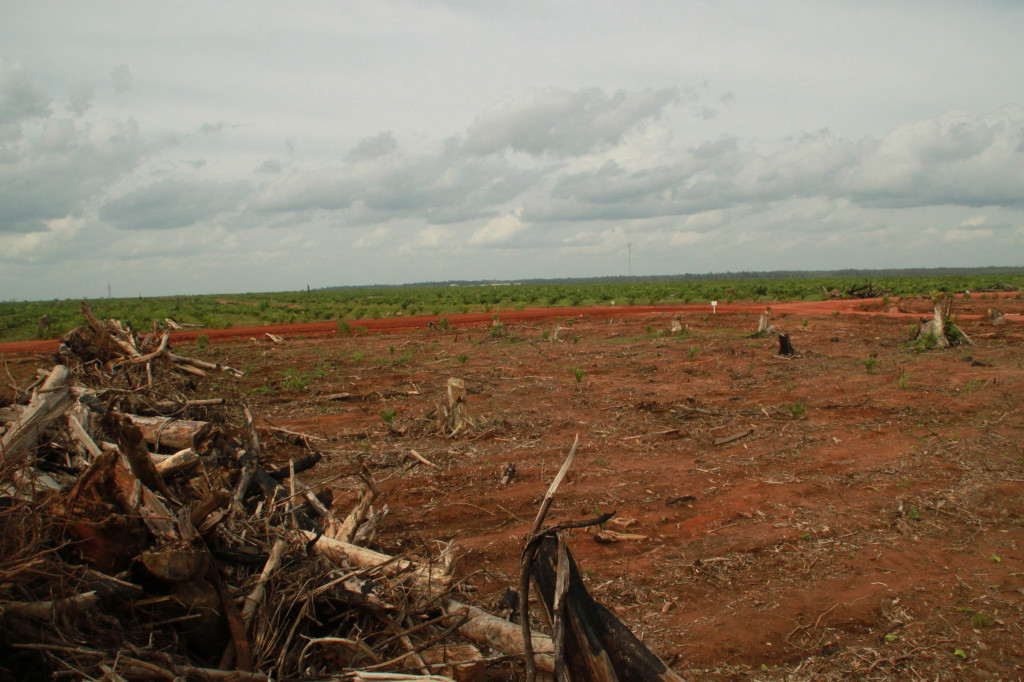
Deforestation in West Papua.

Tuesday, June 12, 2012

West Papua Report for June 2012


West Papua Report

Summary

The Indonesian Government's human rights record came under scrutiny at the UN Human Rights Council in Geneva which convened a quadrennial review of Indonesia's progress on human rights protection. The focus on developments in West Papua was more intense than the last review with the denial of freedom of speech and the holding of political prisoners among the leading concerns. Indonesia promised to invite the UN Special Rapporteur on Freedom of Speech though it was unclear if he would be allowed to visit West Papua. The U.S. State Department released its annual global review of human rights observance. The report gave significant attention to human rights violations in West Papua with some focus on the role of the security forces. As in the past, the State Department report ignored the Indonesian government's failure to provide minimally adequate health, education and other vital services to the Papuan people. Amnesty International also issued its annual report on human rights with a significant focus on rights issues in West Papua. A detailed study revealed the Indonesian government's failure to protect Papuans from unscrupulous land developers in West Papua. Demonstrators in Vanuatu targeted their government's warming relationship with Indonesia, particularly with Indonesian security forces.

Full report here

Friday, March 19, 2010

Tough week for Sinar Mas

from Ayu Oktaviani

Sinar Mas, Indonesia’s largest oil palm company which has come under considerable criticism for its palm oil operations in recent years, was handed two significant defeats this week.

Food giant NestlĂ© found itself on the defensive, with the release of a report from Greenpeace criticizing the company for buying palm oil from Sinar Mas. This comes three months after the largest buyer of palm oil, Unilever, announced that it would no longer be purchasing palm oil from Sinar Mas, followed a month later by a similar announcement from Kraft Foods. NestlĂ©’s immediate response that Sinar Mas palm oil was only used in products sold on the domestic market, a practice that they would discontinue, showed how controversial Sinar Mas has become. Western consumers are becoming increasingly concerned about palm oil plantations that have been clearing forests across the archipelago, destroying local habitats, particularly in Sumatera, Borneo and Papua where most of the remaining rainforests are located in Indonesia.  

A much less reported victory for local resistance against oil palm happened on March 18 in West Kalimantan (Indonesian Borneo). Two local indigenous leaders, Japin and Vitalis Andi, were released from custody after spending more than three weeks in a Ketapang jail for opposing a Sinar Mas oil palm plantation which is destroying indigenous lands. 

The case began in April 2008, when PT. Bangun Nusa Mandiri (PT. BNM), a subsidiary of Sinar Mas, began clearing land for an oil palm plantation in the Marau Subdistrict of Ketapang, West Kalimantan. By September 2009, the company had destroyed 250 hectares of land traditionally held by the Jalai Dayak people in Silat Hulu village.

From the start, the community refused to hand over their fields to the company, and made various attempts to negotiate with the company directly and through the local government, but to no effect. On September 28, 2009, Mr. Japin from Silat Hulu reported the company to the local Marau police office on behalf of his community. The next day, about 60 people from Silat Hulu collectively confiscated two bulldozers and a theodolite from PT. BNM in an effort to stop the clearing. The community soon gave the theodolite over to the police, but continued to hold the heavy equipment as evidence in their case against PT. BNM. 

The community also applied traditional justice mechanisms to the company, demanding financial compensation for trees and other vegetation that had been cleared as well as refusing the company further entry to their lands. The company ignored these demands and the traditional legal system. The community continued to look for justice, and on October 26, 2009, Luhai Hartanto, B, Ritung and Japin, on behalf of the indigenous people of Silat Hulu, brought the case to the West Kalimantan delegate for the Indonesian National Commission on Human Rights (Komnas HAM), and to the provincial police department of West Kalimantan. 

On October 15, fully-armed local police came to Silat Hulu, to secure the peace and negotiate a settlement between the villagers and the Sinar Mas subsidiary. The police did not flatly reject the community-imposed penalty, but attempted to renegotiate the compensation amount for plots destroyed by PT. BNM. The community agreed to reduce the monetary compensation from 1.3 billion Rupiah to 510 million Rupiah (US$ 140,000 to US$55,000), in the hope of a quick resolution, with assurances that the police would push for PT BNM to resolve the case.