Showing posts with label journalism. Show all posts

Friday, July 10, 2015

July 2015 West Papua Report - exclusive interviews on #papuaitukita and #wp4msg

West Papua Report July 2015


This edition's PERSPECTIVE is an exclusive interview with Zely Airane of the #PapuaItuKita on creative ways they are raising issues involving West Papua in Indonesia. 

In UPDATE: This Issue highlights the recent Melanesian Spearhead Group summit in the Solomon Islands where the United Movement for the Liberation of West Papua (ULMWP) was given observer status. ULMWP's Secretary General Octo Mote talks about the implications of the decision for West Papua. WPAT's interview with Mote is followed by Indonesian and other reactions to the summit, which also upgraded Indonesia's status to associate member of the regional group. The report then analyzes oversights in the State Department's recent human rights report. Also in this issue, 
Papuans Behind Bars report on a new high in arbitrary detentions; the Indonesian parliament blocked plans to release more Papuan political prisoners; and confusion continues on foreign journalist travel to West Papua

In CHRONICLE: A retired Indonesian General says TNI actions in West Papua violate human rights. An NGO criticized plans for a new military command (Kodam) in West Papua. A highly-regarded Australian journalist has described "ignorance, corruption and racism" in West Papua in a series of articles, and a long-term observer analyzes President Widodo's recent visit to the region.


Read the whole issue here

Tuesday, November 11, 2014

November West Papua Report is now out

This is the 127th in a series of monthly reports that focus on developments affecting Papuans. This series is produced by the non-profit West Papua Advocacy Team (WPAT) drawing on media accounts, other NGO assessments, and analysis and reporting from sources within West Papua. This report is co-published by the East Timor and Indonesia Action Network (ETAN). Back issues are posted online at  http://www.etan.org/issues/wpapua/default.htm Q

Read the full issue here; http://etan.org/issues/wpapua/2014/1411wpap.htm. For additional news on West Papua see the reg.westpapua listserv archive or on Twitter.

CONTENTS

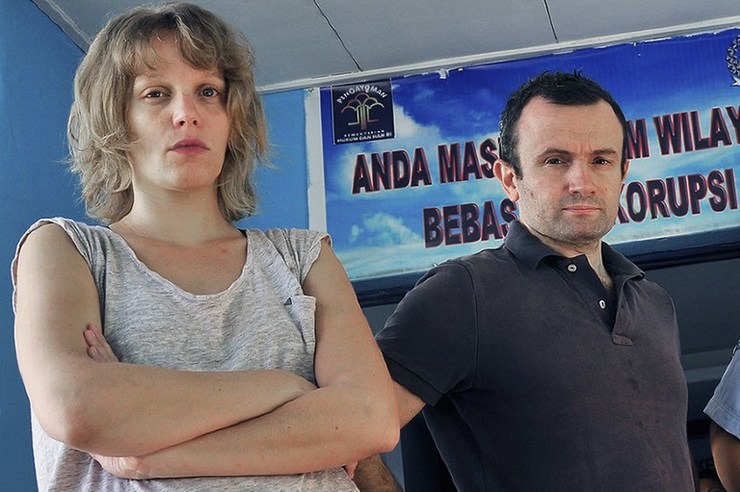
This edition's PERSPECTIVE looks at the controversial appointment of retired General Ryamizard Ryacudu as Defense Minister by President Joko Widodo. UPDATEreports on Widodo's initial comments on West Papua. He has pledged to pursue a more benign approach to the multiple economic, education and heath problems facing Papuans, but critics note his failure to acknowledge ongoing human rights problems there. Two French journalists who had been detained for alleged immigration violations were finally freed. Their arrest prompted widespread protest internationally and within Indonesia over efforts by Jakarta to limit international awareness of the repression in West Papua. The U.S. plans to expand cooperation with the Indonesian navy notwithstanding its role in the 1998 Biak massacre. The arrest of six Papuans and wounding of one has prompted armed rebel threats of new hostilities in the Central Highlands. A new project employs mapping to advance land rights protections. President Widodo has named the first Papuan woman to be an Indonesian government minister. The new Home Minister has pledged to pursue solutions to problems affecting minorities, but supports further division of Papua into more provinces. Legislation to end local voting for governors, mayors and district heads is stalled for now. In CHRONICLE, the report notes an outstanding analysis by Inside Indonesia which explores the devastating impact of HIV-AIDS in West Papua.


Wednesday, September 10, 2014

Timor and West Papua - September 2014 West Papua Report

West Papua Report September 2014 

CONTENTS

This month's PERSPECTIVE is by ETAN's John M. Miller. It looks at differences and similarities in the historical experience of Timor-Leste (East Timor) and West Papua.

French journalists Valentine Bourrat and Thomas Dandois
currently under arrest in West Papua. Photo: AFP
UPDATE examines the potential impact a Joko Widodo administration may have on West Papua, noting high expectations for a new focus on the "neglected region." Two French journalists have been detained by security authorities in West Papua; this action may be intended to challenge President-elect Widodo who has spoken of his intention to open West Papua to international media scrutiny. "Development" plans in the Bintuni Bay area appear to be ignoring the voices and interests of local Papuans. Security forces have detained and beaten two Papuans in Manokwari. Widodo plans to establish a human rights court are encouraging, but it is not clear whether the court will address the extraordinary abuses of the 1965-66 period or the systematic abuse of human rights in West Papua extending back even further.

CHRONICLE highlights appeals to President-elect Widodo by Amnesty International and Human Rights Watch regarding the need to make human rights a priority. Both appeals include a focus on West Papua. A comment by Pat Walsh offers the view that the Widodo administration may offer the "best prospect" for progress on the decades-old "Papua problem."


Tangguh LNG plant at Bintuni Bay, West Papua. Photo: Tempo.

Sunday, January 13, 2013

West Papua Report - January 2012


The 105th in a series of monthly reports that focus on developments affecting West Papuans. This series is produced by the non-profit West Papua Advocacy Team (WPAT) drawing on media accounts, other NGO assessments, and analysis and reporting from sources within West Papua. This report is co-published with the East Timor and Indonesia Action Network (ETAN). Back issues are posted online at http://www.etan.org/issues/wpapua/default.htm Questions regarding this report can be addressed to Edmund McWilliams at edmcw@msn.com. If you wish to receive the report directly via e-mail, send a note to etan@etan.orgFor additional news on West Papua see the reg.westpapua listserv archive or on Twitter.

CONTENTS

This edition's PERSPECTIVE discusses Indonesian presidential aspirant Lt. General (ret) Prabowo dark role in West Papua's past. In the UPDATE section, we review the Indonesian security forces' expanding campaign of violence targeting self-determination advocates associated with the West Papua National Committee (KNPB). We also summarize the implications for human rights of the proposed new "anti-terrorism" law and describe the continuing destruction of pristine forests throughout the Indonesian archipelago. In CHRONICLE: a new Asian Human Rights Commission "alert" about police violence in West Papua, a report by the Alliance of Independent Journalists regarding the rise of threats and violence against journalists, and the Australia West Papua Association Sydney's review of human rights developments in West Papua. This edition also highlights a critique of the Merauke Integrated Food and Energy Estate project (MIFEE) by Indigenous Peoples Organization of Bian Enim.


Read the full issue here


See also West Papua Advocacy Team Urges Unrestricted Visit by UN Special Rapporteur


Monday, September 6, 2010

West Papua Report - September 2010

This is the 77th in a series of monthly reports that focus on developments affecting Papuans. This series is produced by the non-profit West Papua Advocacy Team (WPAT) drawing on media accounts, other NGO assessments, and analysis and reporting from sources within West Papua. This report is co-published with the East Timor and Indonesia Action Network (ETAN) Back issues are posted online at http://etan.org/issues/wpapua/default.htm Questions regarding this report can be addressed to Edmund McWilliams at edmcw@msn.com.

Summary: 

More than a score of international non-governmental organizations called on President Yudhoyono to release Papuan Political Prisoners in commemoration of Indonesia's August 17 Independence Day. Although the President did release and reduce sentences for convicted terrorists and common criminals on the national day, he did not respond to the appeal regarding political prisoners. The Indonesian Government has banned activities by Cordaid, a Dutch humanitarian organization that has aided poor Papuans for over three decades. The action is reminiscent of the Indonesian Government's banning of International Committee of The Red Cross in West Papua in 2009. The Indonesian Commission on Human Rights and Papuan churches have urged the Indonesian government to reconsider  its security approach in the Puncak Jaya region and address the growing violence there, including attacks on churches. The Indonesian government is under growing pressure to investigate the mysterious murder of a journalist in Merauke. Local police claim he committed suicide. The murdered journalist had built a reputation on investigation of illegal military businesses. The murder comes at a time of growing tension in the area as corporate interests seek to develop a massive food plantation. A video circulating widely on YouTube reveals the final moments of a Papuan bayoneted while in custody as he is taunted by the police.

Read the complete issue here

Tuesday, December 8, 2009

Purwanto's Balibo revelation


Ex-Kopassus officer Gatot Purwanto revelation in Tempo magazine that he participated in the deliberate killing of the Balibo 5 in October 1975 is important, but contradictory and apparently designed to provide a justification for the killings. If taken at face value, it would absolve his superiors and leave largely intact the Indonesian version of events that crossfire was ultimately responsible for the killings.

The interview and Tempo cover story grow out of attempts to show the "Balibo" film in Indonesia, which was banned by the Indonesian censors. (The Alliance of Indonesia Journalists [AJI] did show the film, defying the ban.) In recent years, other films (documentaries) on Timor have also been banned from showing at the Jakarta International Film Festival (Jiffest). The censorship shows that in post-Suharto Indonesia the establishment is more interested in covering up past crimes and protecting the military officers who committed them, than in expanding democratic freedoms.

As Shirley Shackleton, widow of the murdered Balibo journalist Gregory Shackleton and a staunch advocate for accountability for the human rights crimes committed in East Timor, says that at least part of Purwanto's "confession" contradicts multiple eyewitness testimony. ''I think it [his statement] is a smokescreen to protect his commanding officer, Yunus Yosfiah so that Yosfiah will be able to say, 'I've got eyewitnesses,'' Shackleton, told the Sydney Morning Herald.


Purwanto, who with other Indonesian soliders had illegally entered then Portuguese Timor, told Tempo: "If we let them live, they would tell everyone it was an Indonesian invasion. If they died and we abandoned them, there would be evidence that they were shot in territory controlled by Indonesian guerrillas. So, the simple way was to eliminate everything. We just claimed not to know anything. It was the instant reaction at the time." Purwanto also said "the shots happened when we were provoked into shooting at the place where they were hiding, because shots came from there," while they were waiting for orders.

Shirley Shackleton's response:
"He's saying it wasn't crossfire. He also says that the troops fired after a shot came from behind the journalists. (But) there was no one in that village - it was completely deserted. That's bulls---. Team Susi was an assassination squad sent to shut them up. This was bloody murder."

Both the Timor-Leste Commission for Reception, Truth and Reconciliation (CAVR) and the New South Wales Coroner, citing eyewitness accounts,  found there was no crossfire.

The Australian Federal Police, following up on the coroner's report are conducting a war crimes inquiry. Indonesia, always ready to try to bury past military crimes, is refusing to cooperate. It is sticking to the line that the journalists died in crossfire.

Friday, August 7, 2009

Woolcott and Balibo

Clinton Fernandes responded on the east-timor listserv (archive here, subscribe here) to an article in the Australian which features self-serving remarks by former Australian Ambassador to Indonesia Richard Woolcott. The retired diplomat blames the murdered Balibo 5 journalists and their bosses for the deaths:
"The ABC left, and others left," Mr Woolcott said. "I think proprietors (of the TV stations) bear a heavy responsibility that they've never had to shoulder." ...He said the Indonesians "would have regarded (the reporters) as combatants because of their close association with Fretilin".
He also denies any Australian or personal culpability:
Mr Woolcott said he assumed the [Balibo] film would be "partly fiction, but I don't want to buy into an argument about what the Australian government knew, or didn't know. All my cables have been made public. I have put it all down in my book, and I would not change a word of that chapter. It is simply a tragedy that these young and inexperienced people were there, and their lives were cut short."

Fernandes responds:

1. On 13th October 1975, Woolcott reported in a cable that he had been told by his Indonesian interlocutors that "The main thrust of the operation would begin on 15 October. It would be through Balibo and Maliana/Atsabe".

2. On 14th October, viewers across Australia watched Greg Shackleton's story stating that the Channel 7 team were on their way to the border.

3. On 15th October, Woolcott was once again told by the Indonesians that "Initially an Indonesian force of 800 will advance Batugade-Balibo-Maliana-Atsabe... It is of course clear that the presence of Indonesian forces of this order will become public. The Indonesians acknowledge this. The President's policy will be to deny any reports of the presence of Indonesian forces in Portuguese Timor."

4. On 16th October, the Indonesians attacked Balibo.

5. While there were no mobile phones in those days, Woolcott had immediate access to his Indonesian interlocutors face-to-face.

6. Here's an extract from the proceedings of the Coronial Inquest:

"Every single move by the Indonesians succeeded according to their plans. When informed of the precise Indonesian battle plans, no objection, public or private, was voiced. There were no news broadcasts showing Indonesian involvement in the attack on Balibo. Because senior Australian leaders had been compromised by advance warning of the attack, they were hardly in a position to disclose their true knowledge to the Australian people. When news of the deaths came out, not a single word in public or in private was uttered by the Australian Government or political leaders to suggest involvement or blame on the part of the Indonesians for the deaths of the journalists. Instead, Australian officials in public and in private persisted in what can only be called a bizarre charade of asking the Indonesian Military to use their good offices in seeking information from their Timorese militia allies about the deaths of the journalists... It is apparent that the Indonesian leaders engaged in a masterful power play worthy of an international chess grandmaster using Australian leaders and departmental officers as their pawns."

http://www.unsw.adfa.edu.au/hass/Timor/3/east/index.html

see also: ETAN: Australian Inquest into Balibo Journalists Killings in East Timor Shows Ongoing Need to Pursue Justice and Accountability